MeetYourClinic Editorial Team
Medical Tourism Research · Updated Mar 2026
Quick Summary
A calm, day-by-day guide to hair transplant recovery: what to expect in the first week, when shedding starts, when growth returns, red flags to watch for, and when you can wash, work, exercise, drink alcohol, have sex, and fly.
Recovering from a hair transplant is usually straightforward, but the first two weeks can feel unnerving because your scalp looks (and feels) worse before it looks better. This guide walks you through a realistic recovery timeline, what’s normal, what’s not, and the practical questions UK patients ask most often: washing, hats, work, gym, alcohol, sex, and flying.
Quick Summary
- Days 0–3: Expect swelling, tightness, and tiny scabs. Your grafts are at their most vulnerable. Sleep elevated, avoid touching, and follow your clinic’s spray and medication plan. Swelling often peaks around day 2–3. [1][2]
- Days 4–7: Scabs darken and start to loosen. Mild itch is common. You usually begin gentler washing as instructed. [1][3]
- Days 8–14: Most scabs come off with careful washing. The grafts are generally more secure, but you still want to avoid friction, sun, and heavy sweating. [1][3]
- Weeks 2–4: Shedding (shock loss) is common. The transplanted hairs fall out but the follicles remain. This is expected. [1][3]
- Months 2–6: New growth starts (often uneven and fine at first), then gradually thickens. [1][3]
- Months 6–12: Results continue to mature. Many people see a strong improvement by 9–12 months, sometimes longer for the crown. [1][3]
If you’re still choosing between techniques, read /blog/fue-vs-dhi-hair-transplant-2026 for a calm comparison, and /blog/how-many-grafts-do-i-need-2026 if you’re trying to sense-check graft numbers.
Before we start: why timelines vary
No two recoveries look identical. Your timeline depends on:
- Technique: FUE, DHI, and FUT have different donor-area healing patterns. [1]
- Graft count and recipient area size: More grafts usually means more scabbing and a longer “cosmetic recovery” phase.
- Scalp characteristics: Oily vs dry scalp, skin sensitivity, tendency to form thicker scabs.
- Aftercare: Gentle washing, avoiding trauma, and sun protection genuinely matter in the first two weeks.
- Health and medications: Smoking, uncontrolled diabetes, and certain medications can slow healing. [4][5]
This guide focuses on the most common scenario for medical tourism: FUE or DHI with a shaved recipient area. If you had FUT (strip surgery), your clinic’s instructions for the linear incision take priority.
Day-by-day: the first week (Days 0–7)
Day 0 (Surgery day)
What you’ll likely feel:
- Numbness wearing off, tightness, and mild soreness.
- A “sunburn” sensation in the recipient area.
- Donor area (back and sides) may feel tender.
What you’ll likely see:
- Tiny graft sites with pinpoint blood spotting.
- Recipient area looks red and “peppered”.
What’s normal:
- Mild oozing for a few hours.
- Mild pain controlled with the medication plan.
What to do:
- Do not touch or pick.
- Sleep on your back with your head elevated (two pillows or a wedge) to reduce swelling. [2]
- Take prescribed antibiotics/anti-inflammatories exactly as directed.
Red flags (call your clinic):
- Heavy bleeding that doesn’t stop with gentle pressure.
- Severe pain not improved with recommended pain relief.
Day 1
What’s normal:
- Swelling can begin in the forehead.
- Tightness and mild soreness in the donor area.
Care tips:
- Continue saline sprays if your clinic advised them.
- Avoid bending over suddenly (it can increase swelling).
Red flags:
- Fever, spreading redness, or pus-like discharge (possible infection). [5]
Day 2
What’s normal:
- Swelling often increases and may move down the forehead.
- Mild bruising can begin.
Common worry: “My forehead looks puffy, did something go wrong?”
Swelling can be a normal short-term effect after scalp procedures and can peak around day 2–3. [2]
Red flags:
- Swelling around one eye with significant pain, vision changes, or worsening redness.
Day 3
What’s normal:
- Swelling may peak and then start to settle.
- Scabs become more noticeable.
- Itchiness may start.
What helps:
- Keep nails short.
- Ask your clinic what’s safe for itch relief (some patients are advised to use a specific antihistamine). Do not add products without checking.
Day 4
What’s normal:
- Redness persists, especially in fair skin.
- Scabs may look darker.
Washing (typical guidance):
Many clinics start gentle washing around day 3–5, but the exact timing varies. Follow your surgeon’s written plan. In general, you’ll be asked to:
- Apply a recommended foam or lotion to soften crusts
- Rinse with lukewarm water
- Pat dry, do not rub
Day 5
What’s normal:
- Donor area may feel tight or “prickly”.
- Recipient area itching can be more noticeable.
Red flags:
- Increasing pain, warmth, spreading redness, or a foul smell.
Day 6
What’s normal:
- Scabs begin loosening with washing.
- Redness gradually reduces for many people, but can linger.
What not to do:
- Avoid hats that scrape the grafts.
- Avoid sun exposure.
Day 7
What’s normal:
- Many patients are ready for “public-facing life” with careful styling, but you may still look visibly scabby.
- Donor area is often cosmetically improved by now, though it can still look pink.
Milestone:
Your grafts are generally more stable by the end of the first week, but you still want to avoid friction and heavy sweating until you’re cleared by your clinic. [1]
Days 8–14: scab removal and settling
This is the phase where many people feel relief because the “worst-looking” part starts to resolve.
What’s normal:
- Scabs come off gradually with washing.
- Mild flaking and dryness.
- Some numbness or altered sensation in the scalp.
A note on scabs:
Scabs should soften and lift with washing. Picking can pull out hairs and irritate the skin. If you’re unsure whether scabs are ready to come off, ask your clinic rather than forcing it.
Red flags:
- Yellow crusting with increasing pain (possible infection).
- Clusters of pimples with significant tenderness.
Ready to Compare Clinics?
Get verified quotes from top-rated procedures clinics. Compare prices and reviews in minutes.
Weeks 2–4: shedding (and the panic phase)
What happens in this phase
A common experience is that the transplanted hairs start to shed. People often describe it as “all the new hair fell out”.
This is usually normal. The hair shafts can fall out while the follicles remain in place and later regrow. [1][3]
You might also notice:
- Shock loss of some existing hairs around the transplant area (temporary for many patients). [3]
- Patchiness: some areas look better than others.
- Occasional small spots of folliculitis (inflamed follicles), which your clinic can advise on.
What’s normal vs what’s not
Normal:
- Shedding of transplanted hairs
- Mild scalp sensitivity
- Patchy appearance
Red flags:
- Rapidly spreading redness, heat, swelling, and pain
- Fever or feeling generally unwell
- A foul-smelling discharge
If you’re recovering abroad and unsure whether something is “normal”, have a read of /blog/hair-transplant-turkey-2026-guide for a practical overview of aftercare planning and how to choose a clinic that supports you once you’re back in the UK.
Months 2–6: new growth begins (slowly, then faster)
What to expect
This is when many patients see the first meaningful regrowth, but it is rarely a straight line.
Typical pattern:
- Months 2–3: Early hairs may be fine, colourless, and uneven.
- Months 3–4: Coverage improves, though density can still look “see-through” in bright light.
- Months 4–6: Hair shafts thicken and the overall look becomes more natural.
Clinics often quote that visible growth begins around the 3–4 month mark, with continued thickening beyond that. [1][3]
Common worries in months 2–6
- “My hair is growing at different speeds.” Normal.
- “The crown is still thin.” The crown can mature later than the hairline. [3]
- “My scalp is still pink.” Some people have lingering redness, especially after larger sessions or in sensitive skin.
Months 6–12: maturation and final result
By this stage, most people are out of the “recovery” mindset and into the “assessment” mindset.
What’s typical:
- A strong cosmetic improvement by 9–12 months for many patients.
- Continued changes in texture, direction, and thickness.
- Crown results can keep improving beyond 12 months in some cases. [3]
If your plan included medications like finasteride or topical minoxidil, your surgeon may discuss timing and consistency to support native hair. Always follow medical advice, particularly if you have side effects or pre-existing conditions. [6][7]
What’s normal vs red flags (clear checklist)
Normal (common, usually not urgent)
- Swelling of the forehead (especially days 2–4) [2]
- Redness and scabbing in the recipient area (first 1–2 weeks) [1][3]
- Mild bruising around the forehead or eyes [2]
- Itching during healing
- Temporary numbness or altered sensation
- Shedding of transplanted hairs in weeks 2–6 [1][3]
- Patchiness during months 2–6
Red flags (contact your clinic urgently)
- Fever, chills, or feeling acutely unwell [5]
- Increasing pain, heat, swelling, and redness (especially if spreading) [5]
- Pus-like discharge, worsening odour, or “wet” yellow crusting [5]
- Sudden significant bleeding that won’t stop
- Vision symptoms, severe facial swelling, or severe headache
- Signs of an allergic reaction to medication (wheezing, facial swelling, hives)
If you’re unsure, take clear photos in good light and send them to the clinic. Most reputable clinics expect to support you remotely after you travel home.
When can you…? (washing, hats, work, gym, alcohol, sex, flying)
Because clinics differ slightly, treat this as typical guidance rather than a rulebook. Your surgeon’s instructions come first.
When can I wash my hair after a hair transplant?
Many clinics recommend gentle washing starting around day 3–5, often with a specific technique to soften scabs and avoid rubbing. [1][3]
- Use lukewarm water.
- Pat dry, don’t rub.
- Avoid high-pressure shower streams directly onto the recipient area early on.
When can I wear a hat after a hair transplant?
A hat is mainly a friction question. In the first week, a tight hat can catch scabs or disturb grafts.
Typical advice:
- First 7 days: avoid hats unless your clinic says otherwise.
- After day 7–10: some clinics allow a loose, clean hat that doesn’t rub the grafts.
If you must wear one for travel, ask your clinic what type (often a loose bucket hat is preferred over a tight cap).
When can I go back to work?
- Desk job / remote work: many people return in 2–5 days, depending on swelling and how comfortable they feel on camera.
- Customer-facing roles: often 7–14 days to look more “normal” once scabs have cleared.
- Physical jobs: you may need longer if heavy lifting, sweating, or helmet use is involved.
When can I go to the gym after a hair transplant?
Sweat, friction, and raised blood pressure can irritate the scalp early on.
Typical guidance:
- First 7–10 days: avoid gym, running, heavy lifting.
- After 10–14 days: light exercise may be allowed.
- After 3–4 weeks: many people return to heavier training if the scalp is fully healed.
Get written clearance from your clinic, especially if you do contact sports or wear headgear.
When can I drink alcohol after a hair transplant?
Many clinics advise avoiding alcohol for at least 48–72 hours, sometimes longer, because it can increase bleeding risk and interact with medications. [8]
If you’re travelling for surgery, it’s sensible to avoid alcohol until:
- You’ve finished antibiotics (if prescribed)
- Swelling has settled
- You’re able to hydrate and sleep properly
When can I have sex after a hair transplant?
People rarely ask this directly in clinic, but they google it later.
Typical advice:
- First 7–10 days: avoid sex or anything that causes sweating, blood pressure spikes, or accidental rubbing.
- After 10–14 days: many people resume gently, but avoid positions where the scalp could be knocked.
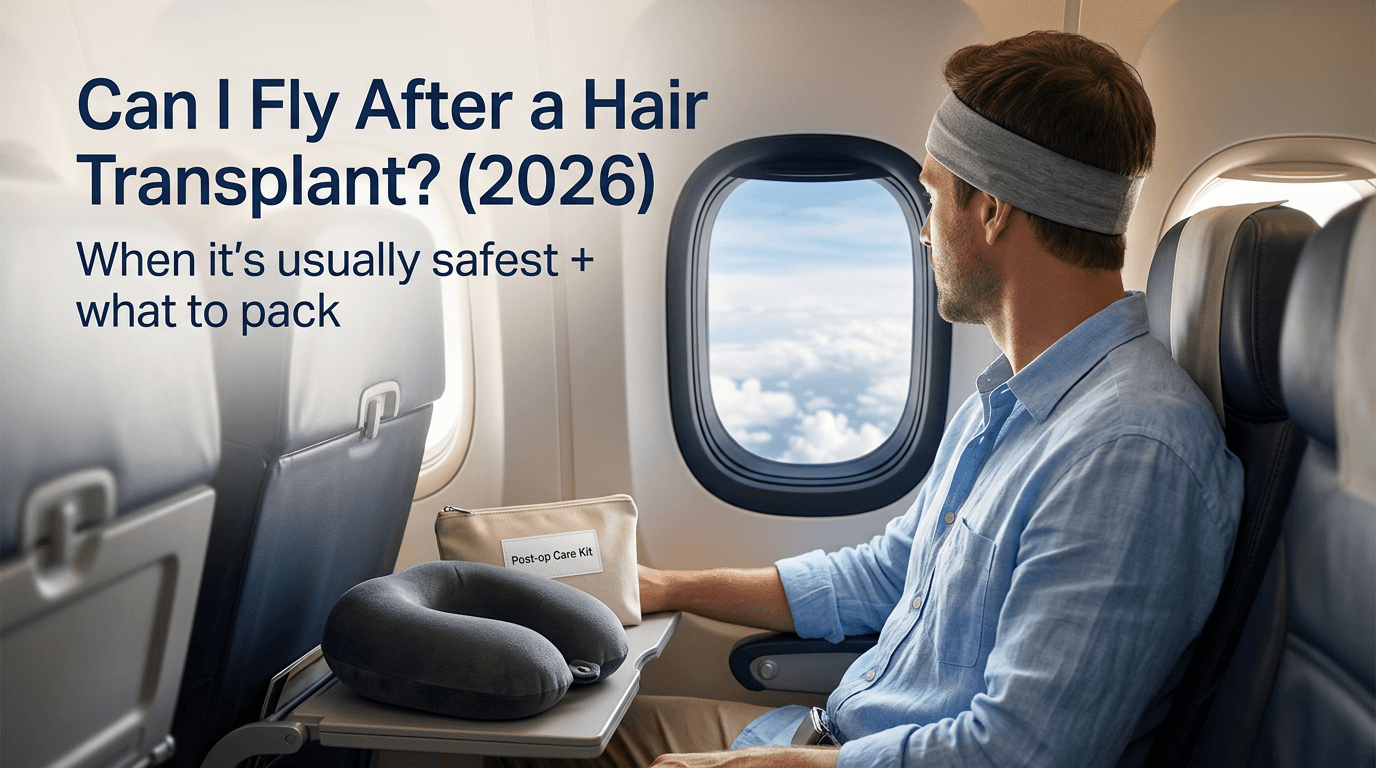
When can I fly after a hair transplant?
Flying is one of the biggest medical tourism questions.
In many Turkey itineraries, patients fly home 1–3 days after surgery. That’s common, but it isn’t the same as “risk-free”. Your biggest issues are swelling, comfort, hygiene, and having a plan if something feels wrong.
Typical considerations:
- Short-haul flight (Turkey to UK): often done within a few days; swelling may be worse on the plane. [2]
- Long-haul flights: more challenging for swelling, dehydration, and discomfort. Consider staying a few extra days if you can.
If you can choose, many patients prefer flying once:
- The first wash has been done under guidance
- Pain is controlled
- Swelling is settling (often after day 3–4)
Ask your clinic to give you:
- A written aftercare plan
- Emergency contact details
- Guidance on hats, pillows, and in-flight care
Practical aftercare tips that reduce stress
- Take photos daily for the first 10 days. It helps you see progress and gives your clinic context.
- Change pillowcases often during the first week.
- Avoid sun on the scalp (sunburn plus healing skin is a rough combination). Use physical barriers rather than sunscreen early on unless your surgeon recommends it.
- Don’t smoke. Smoking is associated with poorer wound healing in general, and many surgeons strongly advise stopping around surgery. [4]
- Have realistic expectations: the first “good” moment often comes after scabs are off, then you wait again during shedding, then growth returns.
FAQs (real search-style questions)
1) How long does it take to recover from a hair transplant?
Most people feel physically fine within a few days, but cosmetic recovery often takes 7–14 days (until scabs clear). Hair growth takes months, with results continuing to improve up to 12 months or longer. [1][3]
2) What day are hair transplant grafts secure?
Grafts become more stable over time. Many clinics consider the first 7–10 days the period to be most careful about rubbing and trauma. Always follow your surgeon’s specific timeline. [1]
3) Is it normal for transplanted hair to fall out after 2 weeks?
Yes. Shedding in weeks 2–6 is common and usually expected. The follicles remain and regrow later. [1][3]
4) What does an infected hair transplant look like?
Possible signs include increasing redness, warmth, swelling, pain, and pus-like discharge, sometimes with fever. If you suspect infection, contact your clinic urgently. [5]
5) When can I sleep normally after a hair transplant?
Many people sleep elevated for the first 3–5 nights to reduce swelling, then gradually return to normal once swelling settles and they can avoid rubbing the grafts. [2]
6) When can I wear a cap after a hair transplant?
A tight cap can rub grafts, especially in the first week. Many clinics recommend waiting 7–10 days and then using a loose, clean hat if needed. Confirm with your clinic.
7) When can I use minoxidil after a hair transplant?
Timing varies. Some surgeons restart topical minoxidil after the scalp has healed (often a few weeks), while others prefer a longer gap. Follow your surgeon’s plan and read safety guidance for the medication itself. [6]
8) How long does redness last after a hair transplant?
Redness often improves in 1–3 weeks, but can last longer, especially in fair or sensitive skin, larger sessions, or if there’s irritation. If redness worsens, becomes painful, or is accompanied by discharge, contact your clinic. [5]
9) When can I cut my hair after a hair transplant?
Many clinics allow a careful scissor trim quite early for non-transplanted areas, but advise delaying clippers on the recipient area for several weeks. Ask your clinic for a clear “scissors vs clippers” timeline.
10) When can I go in the sun after a hair transplant?
Healing skin is vulnerable to pigmentation changes and irritation. Many clinics advise avoiding direct sun on the scalp for several weeks and using physical protection (loose hat) when outdoors. [1]
Sources
- International Society of Hair Restoration Surgery (ISHRS). Patient information and post-operative care guidance. https://ishrs.org/
- British Association of Dermatologists (BAD). General wound and swelling aftercare information (patient guidance). https://www.bad.org.uk/
- StatPearls (NCBI Bookshelf). Hair Transplantation and post-operative expectations (medical overview). https://www.ncbi.nlm.nih.gov/books/
- World Health Organization (WHO). Smoking and wound healing (general surgical recovery evidence summaries). https://www.who.int/
- NHS. Signs of wound infection and when to seek help. https://www.nhs.uk/
- NHS. Minoxidil: uses, safety, and side effects. https://www.nhs.uk/
- NHS. Finasteride: uses, safety, and side effects. https://www.nhs.uk/
- NHS. Alcohol advice around medicines and recovery (general patient guidance). https://www.nhs.uk/
Ready to Start Your Medical Journey?
Compare clinics, read verified reviews, and get personalised quotes from top medical facilities worldwide. Save up to 70% on your treatment.